
The Ultimate Ford F-250 Towing Guide
Whether you're hauling your boat or gearing up for the jobsite, the Ford F-250 is built to handle it all with ease. But knowing what your truck can do (and how to do it safely) makes all the difference. That’s where this guide comes in.
Here is everything you need to know about towing with the Ford F-250, from engine options and towing capacity to innovative features that make life easier on the road.
Whether you’re new to towing or just want to get the most out of your Super Duty, consider this your go-to resource.
Why the Ford F-250 Is a Top Choice for Towing
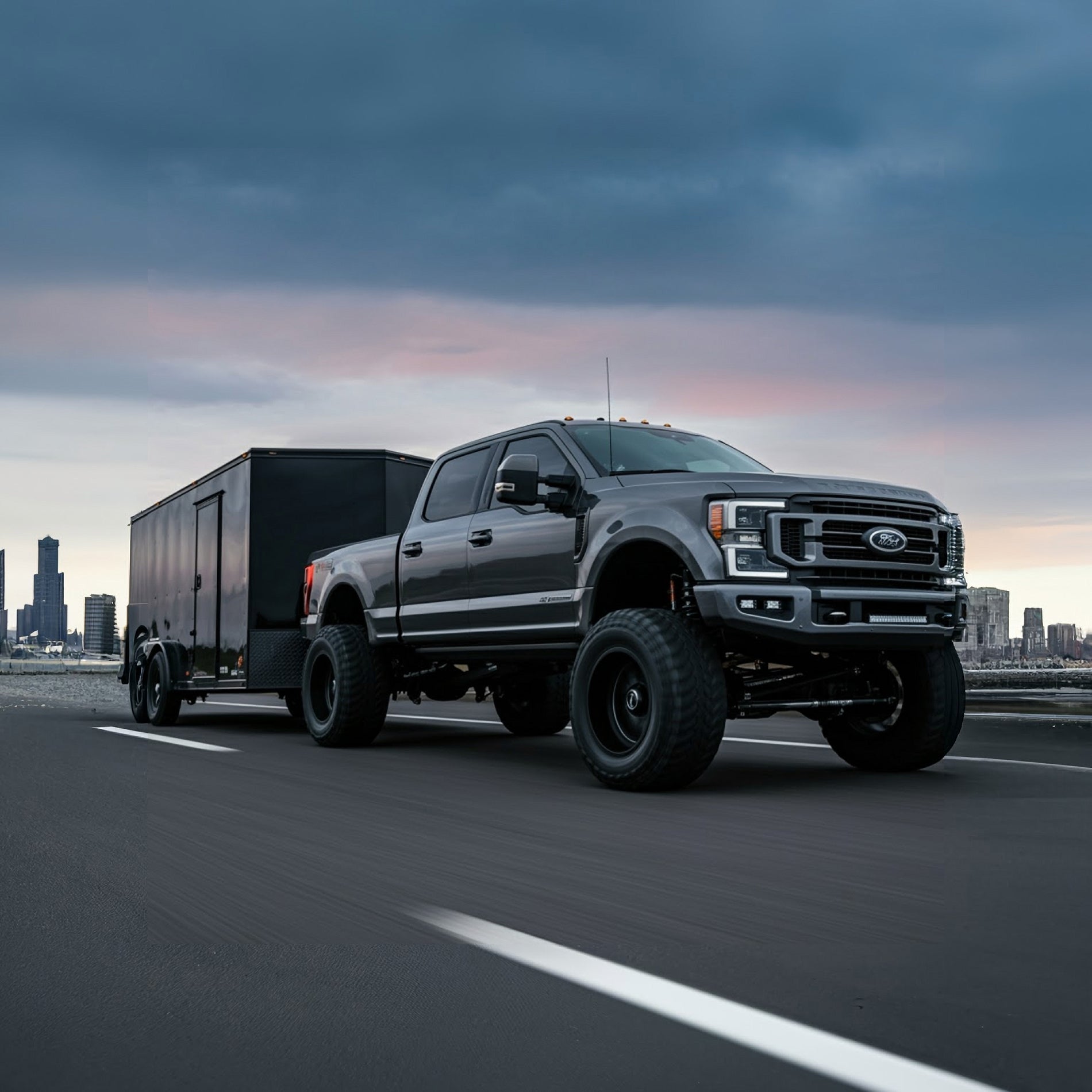
The Ford F-250 has been the choice for drivers who need serious towing power for over 25 years. With an incredible blend of strength, capability, and dependable performance, the F-250 is built to handle tough jobs.
Whether you're towing a horse trailer, a large RV, a fishing boat, or heavy work equipment, this Super Duty truck is up for the task. With powerful engine options, including a 6.8L V8 gas engine, a 7.3L V8 “Godzilla” gas engine, and a 6.7L Power Stroke® V8 Turbo Diesel, the F-250 offers towing capacities that range from around 14,000 to over 23,000 pounds, depending on the configuration. It’s a truck designed for those who need muscle, reliability, and control when it matters most.
Ford F-250 Towing Capacity by Engine & Configuration
The Ford F-250 delivers serious towing power, and the maximum capacity depends on which engine, drivetrain, cab style, and towing setup you choose. Here’s what each Ford F-250 engine configuration offers:
- 6.8L V8 Gas Engine
- Ideal for light to moderate towing
- Max conventional towing: approx. 14,800 lbs
- Max fifth-wheel/gooseneck towing: approx. 15,800 lbs
- 7.3L V8 Gas Engine ("Godzilla")
- Great value with an ideal balance of power and cost
- Max conventional towing: up to 17,200 lbs
- Max fifth-wheel/gooseneck towing: up to 18,300 lbs
- 6.7L Power Stroke® V8 Turbo Diesel
- Best for heavy-duty towing needs
- Max conventional towing: up to 22,000 lbs
- Max fifth-wheel/gooseneck towing: up to 23,000 lbs
Additional factors that impact towing capacity include:
- Cab Styles: Regular Cab typically offers the highest towing capacity
- Drivetrain: 4x2 models can usually tow more than 4x4 models
- Axle Ratio & Towing Packages: Choosing the right gearing and packages can maximize performance
When you choose the setup that matches your lifestyle, you can head out with confidence, knowing you'll be able to handle just about any towing job.
Key Towing Features & Technology
The Ford F-250 is packed with smart towing features and advanced technology designed to make every job safer, easier, and more controlled. For instance, you can take the stress out of backing up with available Pro Trailer Backup Assist™, which helps you steer your trailer in reverse with just the turn of a knob.
Trailer Sway Control works automatically to detect and reduce trailer sway, helping you maintain stability and confidence on the highway. And with the available Smart Hitch system, the truck can measure tongue weight and guide you on proper trailer loading via in-cab prompts.
For enhanced visibility, the F-250 also offers extendable towing mirrors, an integrated trailer brake controller, and onboard scales that provide real-time estimates of payload weight.
Together, these features take the guesswork out of towing and help ensure a safer experience, whether you’re hauling for work or heading out on a weekend adventure.
Payload vs. Towing: What’s the Difference?
You might think that payload and towing are the same thing, but that’s not the case. Payload refers to how much weight your truck can carry in the cab and bed—this includes passengers, cargo, and tools or equipment in the bed.
Towing capacity, on the other hand, is the maximum weight your F-250 can pull behind it with a trailer.
To make the best decision, it can be helpful to know terms like GVWR (Gross Vehicle Weight Rating), which is the maximum weight your truck can safely carry, including payload. Another helpful term is GCWR (Gross Combined Weight Rating), which is the total allowable weight of your truck and trailer combined. Tongue weight—the downward force a trailer exerts on the hitch—also plays a role and should typically be 10–15% of the trailer’s total weight.
For example, if you're towing a 10,000-pound trailer, you'll want a tongue weight of 1,000 to 1,500 pounds, which counts toward your payload. If you're hauling heavy tools in the bed and towing a large trailer, you’ll need to balance both numbers to stay within your truck’s limits.
Tips for Safe Towing with the Ford F-250
If you’re new to towing with a Ford F-250, taking a few simple steps will keep your trip safe and stress-free.
- Start with a pre-tow inspection to check that your hitch is secure, your trailer lights are working, and your load is securely tied down.
- Load heavier items toward the front of the trailer to help with stability.
- Always double-check tire pressure on both your truck and trailer, and make sure your weight is evenly distributed to prevent sway.
- When you're on the road, allow for extra braking distance and maintain a steady speed, especially when you’re descending hills or merging onto highways.
- Avoid sharp turns and sudden maneuvers, and never exceed your truck’s towing capacity.
For a full checklist and more safety tips, refer to your Ford F-250 Owner’s Manual.
Test the Towing Power of a Ford F-250 Today
Ready to see what the Ford F-250 can do? Schedule a test drive or towing demonstration today and experience its legendary power firsthand. Our team of truck experts is here to help you find the right model for your needs and answer any questions about towing, payload, or available features.
Whether you're shopping for a new Super Duty or need advice on hitch installation, our service and parts departments are here to assist you.
Browse our F-250 inventory online or contact us today to get started!